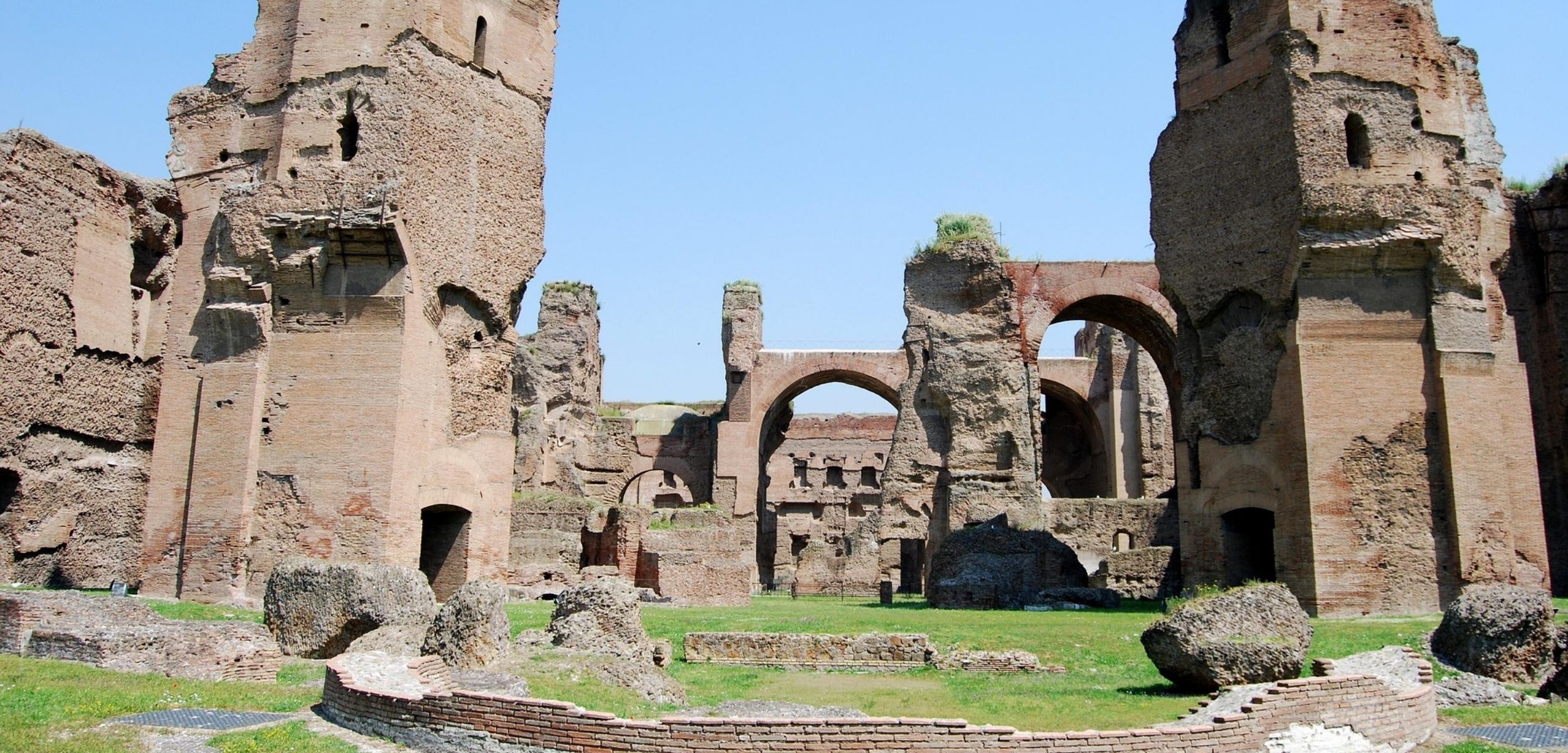
Book your visit to the Baths of Caracalla and be amazed by the grandeur of one of the most extraordinary monumental complexes of ancient Rome.
Purchase your tickets and embark on a journey through archaeology, history, and the remarkable architecture of the Roman Empire.
Admission to the Baths of Caracalla is valid as an open daily ticket, with no timed entry required.
Your booking also includes a digital PDF guide to the Baths of Caracalla and a map of the archaeological site, helping you make the most of your visit.
This booking allows you to visit all areas of the Baths of Caracalla complex that are open to the public, as well as any temporary exhibitions that may be taking place, with no need to wait at the ticket office.
Children and teenagers: Visitors aged 0 to 18 must reserve a free admission ticket.
CANCELLATION POLICY: Tickets for the Baths of Caracalla are non-refundable and non-changeable. Once confirmed, bookings cannot be modified (date or time) or cancelled. No refunds, whether full or partial, can be issued under any circumstances.
THE BATHS OF CARACALLA
The Baths of Caracalla (Thermae Antoninianae) are among the largest and best-preserved thermal complexes of the ancient world. Commissioned by Emperor Caracalla and inaugurated in 216 AD, they were built in the southern part of Rome and remain one of the city’s most impressive archaeological sites.
Their rectangular layout is characteristic of the great imperial baths. More than simply a place for bathing, the complex served as a center for sport, relaxation, social life, and study. Visitors entered the main building through four entrances on the north-eastern façade. Along the central axis were the calidarium (hot bath), tepidarium (warm bath), frigidarium (cold bath), and the natatio, an immense open-air swimming pool. On either side of this axis, additional rooms were arranged symmetrically around two large gymnasiums.
The Baths of Caracalla are one of the few ancient Roman monuments where it is still possible to reconstruct, at least in part, the original decorative scheme. Historical sources describe towering marble columns, floors paved with precious colored marbles imported from the East, glass mosaics, marble wall coverings, painted stucco decorations, and hundreds of statues and monumental sculptural groups displayed in niches, ceremonial halls, and landscaped gardens.
To supply the enormous complex with water, a dedicated branch of the Aqua Marcia aqueduct, known as the Aqua Antoniniana, was specially constructed. Restored several times over the centuries, the baths remained in operation until 537 AD, when they finally ceased functioning.